


Stale coffee oils, fine particulate dust, and stray bean fragments accumulate rapidly inside electric burr mills during daily brewing routines. Understanding how to clean cuisinart coffee grinder dbm 8 equipment protects your morning cup from bitter rancid flavors while keeping the internal drive mechanism running freely. Ground coffee contains natural lipids that coat burr teeth, collection chambers, and dispensing chutes over time. When these residues sit in warm kitchen environments, oxidation turns sweet coffee aromas into stale, muddy odors that spoil fresh beans. Investing a few minutes into routine maintenance preserves grind consistency across everyday drip coffee grinding options and French press brews.
Daily grinder operation inevitably produces fine particles that wedge beneath adjustment rings and clog narrow internal pathways. Learning how to clean cuisinart coffee grinder dbm 8 assemblies also prevents avoidable motor strain caused by compacted grounds trapped between rotating burr plates. Unresolved coffee compaction frequently leads to stalled grinding sessions, irregular particle distribution, and messy countertop static. Regular disassembly and targeted brushing restore optimal bean flow through the hopper down to the removable grounds collector. A proactive maintenance schedule ensures every cup showcases the true notes of your roasted coffee beans without lingering bitterness.

Pros
- Compact and lightweight profile fits neatly into small apartments, dorms, and RV kitchens
- Generous 12-cup capacity handles everyday batch brewing with ease
- Intuitive pulse-to-grind operation gives users direct control over bean texture
- Versatile dual-use performance works effectively for dry spices as well as coffee beans
Cons
- Blade mechanism produces less uniform grounds compared to conical burr grinders
- Non-removable grinding chamber requires manual brush cleaning rather than sink washing
- Requires manual monitoring to prevent over-grinding beans into fine powder
Freshly ground beans make an immediate difference in coffee aroma and flavor, but complex grinders can feel overwhelming during rushed weekday mornings. The Mr. Coffee Electric Coffee Grinder serves as an approachable, entry-level blade grinder designed for straightforward daily use. Featuring a simple push-button mechanism and durable stainless steel chopping blades, this compact appliance quickly breaks down whole beans or dry kitchen spices without requiring barista experience.
This grinder is best suited for budget-minded coffee fans, college students setting up dorm rooms, or casual drip brewer owners who want fresher flavor without spending heavily on high-end equipment. If you brew standard drip pots, French presses, or batch cold brew where exact micron uniformity is not strictly critical, this device handles the task with zero hassle. It also appeals to home cooks who want an affordable tool for grinding whole spices like peppercorns, coriander seeds, or cinnamon.
In terms of grinding performance, the machine operates on a manual pulse system where holding down the safety lid drives the blade. Shorter bursts create coarse particles suitable for French press steeping or cold brew extraction, while extended pulsing yields medium grounds for standard automatic drip machines. Because it utilizes spinning blades rather than burrs, it naturally produces a mix of finer particles alongside coarser fragments. Keeping your grinding bursts brief helps minimize friction heat, protecting delicate bean oils before brewing.
Kitchen practicality is where this unit stands out. Measuring under seven inches tall and weighing just over a pound, it occupies virtually no counter space next to your drip machine or electric kettle. The 36-inch cord provides sufficient reach for awkward wall outlet setups, while the integrated safety switch ensures the motor only engages when the top cover sits securely in place.
Maintenance is straightforward, though it requires a bit of attention since the internal grinding chamber is fixed. A quick sweep with a small brush or a wipe down with a dry cloth keeps residual oils from turning stale over time. For those who switch between coffee beans and pungent culinary spices like cloves or cumin, wiping thoroughly between batches is recommended to avoid unwanted flavor crossover.
Overall, the Mr. Coffee Electric Coffee Grinder provides dependable, no-frills performance at an accessible level. While serious espresso hobbyists will want to invest in a precision burr grinder, everyday coffee drinkers and busy households will appreciate the sheer speed, compact size, and user-friendly nature of this practical kitchen helper.
Electric blade grinders work by slicing beans at high speeds, which means grind consistency depends entirely on timing and technique. Shaking the unit gently while pulsing can help distribute whole beans back down toward the spinning blades, leading to a much more even particle size for your drip coffee filters.
For immersion brewing methods like cold brew and French press, brief three- to five-second pulses prevent over-processing beans into fine sediment. While you will still find occasional bean fragments, adjusting your brew time slightly balances out the extraction, delivering a rich and satisfying morning cup.
Small counters, cluttered office break rooms, and compact dorm kitchenettes demand space-saving gear. This grinder tucks away effortlessly into standard kitchen cabinets or sits unobtrusively beside a single-serve coffee maker without dominating valuable prep area.
The simple push-down lid makes early morning prep quick and quiet enough for apartment living. Paired with its 12-cup capacity, you can grind enough coffee for a full family carafe in less than thirty seconds before heading out the door.

Pros
- Seamless direct replacement for cracked, lost, or clouded Cuisinart DBM-8 containers
- Large capacity handles grounds for single mugs, full 12-cup pots, or cold brew prep
- Transparent walls provide full visibility during the grinding process
- Dishwasher-safe build makes it simple to wash away stubborn coffee oils
Cons
- Engineered exclusively for Cuisinart DBM-8 series and will not fit other grinder brands
- Clear plastic material can still experience static cling with fine coffee dust
- Includes only the collection bin and lid, not the hopper or motor assembly
The ETZ DBM-8GC Upgraded Coffee Grinder Grind Chamber with Lid is a targeted replacement part designed specifically for Cuisinart DBM-8 and DBM-8P1 automatic burr mills. When the original grounds container cracks, gets lost, or turns cloudy from years of daily use, this chamber slides in to restore seamless function. It is an ideal fix for home coffee drinkers, shared office breakrooms, and busy morning routines where fresh grinding is non-negotiable but replacing the entire machine is an unnecessary expense.
A well-fitted collection chamber plays an essential role in daily brewing consistency. The Cuisinart burr grinder utilizes internal safety interlocks that require the grind container to sit fully flush before the motor will engage. Based on product specifications, this replacement matches factory dimensions precisely, allowing coffee lovers to run their preferred grind settings for automatic drip makers, French presses, or pour-over cones without intermittent shutoffs or loose vibrations.
Capacity is generous, holding enough processed coffee grounds for up to 32 standard cups. Whether you are prepping a single batch for a quick weekday commute or grinding an entire bag for weekend cold brew concentrate, the bin collects grounds cleanly without backing up into the burr discharge chute. The transparent food-grade plastic lets you monitor fill levels in real time, preventing sudden overflows that can disrupt morning prep.
Build quality centers on everyday kitchen practicality. The integrated flip-top lid creates a snug seal during grinding, containing airborne coffee particles that often scatter across countertops. Made from lightweight yet sturdy plastic, the chamber resists everyday mechanical fatigue and handles frequent handling easily, making grounds transfer to your filter basket smooth and controlled.
Cleaning is refreshingly straightforward thanks to its dishwasher-safe construction. Residual coffee oils can turn rancid over time, muting the bright flavor profiles of medium roasts or single-origin beans, so being able to place the bin on the top rack of the dishwasher keeps your morning cup tasting fresh. Users who prefer manual washing will find the smooth internal corners easy to rinse with warm soapy water.
While this chamber resolves common container wear, it remains an appliance-specific component that will not work on different burr grinder brands or models. Standard plastic static may also cause some fine particles to cling to the inner walls, which is typical for containers in this class. For any Cuisinart DBM-8 owner wanting an affordable, reliable way to keep their burr mill running smoothly, this replacement chamber is a smart, low-waste purchase.
Maintaining a clean grind chamber is key to preserving the true flavor notes of your whole bean coffee. Over repeated brewing cycles, aromatic coffee oils accumulate along the interior walls and lid of the collection bin. If left unwashed, these oils can oxidize, introducing bitter or stale undertones into your next batch of freshly ground coffee.
This replacement chamber simplifies maintenance because it is fully dishwasher safe. Placing it on the top rack away from intense heating elements cleans away stubborn grounds and oil residue without warping the plastic or compromising the lid seal. For daily upkeep between deep cleanings, a quick rinse under lukewarm water or a gentle wipe with a dry microfiber cloth is all it takes to keep your kitchen coffee station pristine.

Pros
- Exact replacement for original Cuisinart part, no modification needed.
- Clear plastic allows visual tracking of grind volume.
- Easy to remove and clean by hand.
- Affordable solution to revive a worn or cracked chamber.
Cons
- Compatible only with Cuisinart DBM-8P1 model, not universal.
- Plastic material may feel less premium than glass or metal alternatives.
- Hand washing recommended; not dishwasher safe.
If you own a Cuisinart DBM-8P1 burr coffee grinder and the original grind chamber has cracked, worn out, or just become hard to clean, the ERETOW DBM-8GC replacement chamber is a straightforward fix. This is a dedicated replacement part, not a universal accessory, so it fits that specific model without any guesswork. Coffee lovers who rely on their Cuisinart grinder for daily beans will appreciate having a drop-in solution that restores full functionality.
This chamber is made from clear polystyrene, which is lightweight and lets you see exactly how much coffee you're grinding. That's a nice practical touch for busy mornings when you want to grind just the right amount for your brew. The flip-top lid keeps grounds contained while you transfer them to your coffee maker, and the chamber holds enough to brew up to 32 cups. That makes it suitable for households that go through multiple pots a day or for small office setups.
Cleaning is straightforward, though the manufacturer recommends hand washing to maximize the part's lifespan. The removable design means you can simply pop it off the grinder, rinse it, and dry it. No complicated disassembly. For home baristas who grind multiple times a day, this ease of maintenance is a real time-saver. Just be aware that it's not dishwasher safe, so a quick hand wash is the way to go.
Build quality is decent for a plastic replacement part. It's not as hefty as the original might have been, but it feels solid enough for regular use. The transparent material is a plus for monitoring your grind, but like any plastic, it may scratch over time if handled roughly. That said, at this price point, it's an affordable way to extend the life of your grinder rather than replacing the whole unit.
One limitation to keep in mind: this chamber only fits the Cuisinart DBM-8P1 model. If you have a different burr grinder, it won't work. Also, because it's a replacement part, it doesn't come with any extra accessories or instructions beyond the chamber and lid. But if you already own the grinder, setup is as simple as swapping out the old part.
Overall, the ERETOW DBM-8GC is a practical buy for anyone whose Cuisinart DBM-8P1 grind chamber needs replacing. It's a no-fuss solution that keeps your morning coffee routine on track without spending a lot. If you're a coffee lover who values convenience and wants to keep using your trusted grinder, this replacement part is worth considering.
Step-by-Step Maintenance and Care for the Cuisinart DBM-8 Burr Grinder
Routine cleaning represents the single most effective way to protect grind consistency, equipment longevity, and fresh coffee flavor. Whole coffee beans naturally release aromatic lipids that coat metal burrs, plastic chambers, and dispensing channels during every grinding cycle. Over time, oxygen turns these leftover oils rancid, imparting an acrid, bitter profile into subsequent brews. Performing a structured maintenance routine removes trapped chaff, breaks up oily deposits, and clears micro-fines before they compromise your daily brew.
Safety Precautions and Workstation Preparation
Electrical safety forms the essential first step of any small kitchen appliance maintenance procedure. Always disconnect the power cord from the wall outlet before removing components or reaching near the grinding mechanism. Because the Cuisinart DBM-8 uses an electric motor wired directly to internal switches, working on a plugged-in unit introduces severe electrical and mechanical hazards. Setting the grinder on a clean, dry, and well-lit countertop provides ample room to arrange detached components safely without losing parts.
Before pulling components apart, verify that the bean hopper and grounds container are completely free of loose beans. Running the motor for two seconds right before disconnecting power clears loose fragments from the grinding teeth. Once power is disconnected, tip the unit gently over a waste bin or compost bucket to empty any unground coffee beans remaining in the feed throat. Preparing a small soft brush, a dry microfiber cloth, and a wooden toothpick will streamline the entire cleaning process.
Disassembling the Bean Hopper and Upper Burr Plate
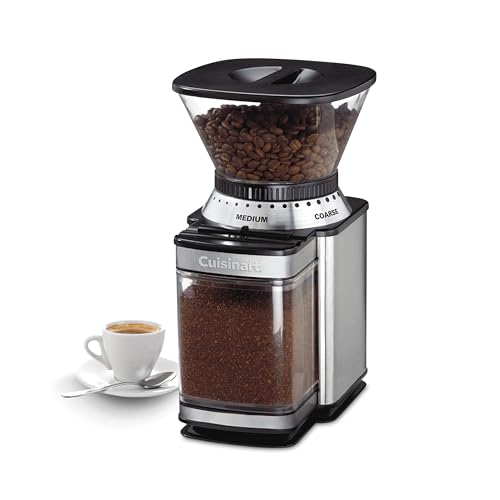
The bean hopper on the Cuisinart DBM-8 burr mill serves as both a bean reservoir and a grind-size selector dial. To remove the bean hopper, rotate the entire hopper counterclockwise until the grind setting indicator moves beyond the coarsest setting mark. Once the internal retention tabs align with the release slots, lift the hopper straight up away from the motorized housing. Inspecting the underside of the hopper often reveals a fine dusting of coffee dust and fragmented bean husks that cling through static electricity.
Beneath the hopper sits the removable upper burr plate, which is housed inside a circular metal collar. Grasp the small wire handle on the upper burr assembly and turn it counterclockwise to disengage it from the lower grinding head. Lift the upper burr straight out of the grinding chamber, taking care not to drop the hardened metal component onto hard tile or granite counter surfaces. Inspect the cutting teeth closely for trapped whole bean slivers, compacted grinds, or foreign debris that may have entered with whole beans.
Examining the lower burr plate inside the housing reveals the driven grinding surface that rotates against the upper burr. Unlike the upper assembly, the lower burr is permanently affixed to the central motor spindle and should not be removed during routine cleaning. Forcing the bottom burr out of position risks stripping internal mounting screws or misaligning the motor drive spindle. Keeping the lower burr mounted in place allows for safe external brushing while preserving precise factory alignment.
Dry Brushing the Grinding Chamber and Cutting Burrs
Moisture is the primary enemy of electric coffee grinder mechanisms and hardened metal burr plates. You must never submerge the motorized base in water, run tap water into the burr chamber, or use damp cloths directly on the metal grinding teeth. Water trapped in the lower housing can cause electrical short circuits, motor corrosion, and permanent rust along the cutting edges. Instead, thorough dry brushing remains the proper method for cleaning domestic flat burr systems.
Use a narrow, stiff-bristle utility brush to sweep loose grounds from the upper burr plate into a trash bin. Work the bristles deep into the directional grooved channels where compressed coffee dust packs tightly against the teeth. Repeat this brushing process on the lower burr plate inside the appliance housing, rotating the spindle gently by hand to reach every sector. A standard wooden toothpick helps dislodge stubborn, hardened bean clumps wedged along the burr edges without scratching the metal surface.
If you enjoy comparing different coffee preparation tools, our guide covering budget burr coffee grinders highlights how burr geometries and access designs influence long-term cleaning routines. Many electric flat burr mills share similar maintenance challenges where fine dust settles into the outer perimeter of the chamber. Vacuuming the open chamber with a narrow vacuum nozzle attachment is an effective method for lifting dislodged particulate dust cleanly without blowing it across your kitchen workspace.
Clearing the Dispensing Chute and Mitigating Static Blockages
The dispensing chute on the Cuisinart DBM-8 transfers freshly milled grounds from the burr chamber into the removable plastic collector. Because this channel is narrow and angled, it represents the most common choke point for static-charged coffee grounds. When dark roast or oily beans pass through the burrs, oily fines adhere to the walls of the chute and gradually narrow the exit aperture. If left uncleaned, this accumulated residue restricts bean flow, increases motor resistance, and creates frustrating grounds backups.
To clear the dispensing chute effectively, insert a small angled bottle brush, pipe cleaner, or flexible straw brush into the chute opening. Work the bristles back and forth with gentle twisting motions to break apart crusted walls of compressed coffee grounds. Keep a shallow dish or paper towel beneath the opening to capture falling flakes of compacted coffee residue. Avoid using metal picks, knives, or screwdrivers inside the chute, as sharp tools can gouge plastic walls and create rough spots where grounds cling.
Static electricity naturally builds during grinding as beans fracture against metal at high velocity. This electrostatic charge causes lightweight fines to cling stubbornly to the plastic chute walls and collection rim. Wiping the exterior rim of the chute housing with a slightly damp microfiber cloth can neutralize external surface charges after the internal channel is completely brushed out. Ensure that the chute area is completely dry before reinstalling collection containers or grinding beans.
Washing and Drying the Removable Grounds Chamber
Unlike the motorized base and cutting burrs, the removable grounds container and bean hopper can be safely cleaned with warm water. The removable grind container captures fines and retains aromatic oils that make plastic surfaces appear foggy and greasy over weeks of use. Submerge the hopper, hopper lid, and grind container in warm water mixed with a few drops of mild, unscented dish soap. Using an unscented detergent prevents lingering synthetic fragrances from permeating the porous plastics and tainting future coffee batches.
Gently clean the inner and outer walls using a soft sponge or microfiber cloth to avoid scratching the transparent surfaces. Abrasive scouring pads or harsh chemical cleaners should never be used because surface scratches trap residual coffee oils and cloud the plastic permanently. For stubborn coffee stains along the corners of the grounds bin, soaking the container in a solution of warm water and baking soda for twenty minutes helps lift residues naturally. Rinse all components thoroughly under clean running water to remove every trace of soap.
Air-drying all washed parts completely is an essential step before snapping anything back onto the motorized base. Even tiny droplets of residual moisture left on the rim of the hopper or collection bin can seep into the grinding chamber, causing grounds to cake against the burrs. Set the hopper and grind container upside down on a clean drying rack or absorbent kitchen towel for several hours. If you need to brew immediately, dry every seam, hinge, and crevice thoroughly using a lint-free cloth.
Evaluating Replacement Containers and Accessory Compatibility
Daily handling, frequent washing, and counter drops can eventually lead to cracked plastic or broken lid hinges on your grounds container. The DBM-8GC grind chamber with lid is the primary removable container built for the Cuisinart DBM-8P1 series, holding enough grounds for up to thirty-two cups of brewed coffee. Third-party manufacturers such as ETZ offer upgraded DBM-8GC replacement chambers crafted from transparent food-grade plastic designed to match factory hardware dimensions. The ETZ design features a clear flip-top lid and is listed as dishwasher safe for easy household maintenance.
Another viable aftermarket option comes from ERETOW, which produces a DBM-8GC grind chamber crafted from lightweight polystyrene material. The ERETOW replacement container measures 3.85 inches by 3.05 inches by 4.2 inches and provides thirty-two cup storage capacity for busy households. To maximize the working lifespan of the ERETOW polystyrene chamber and prevent stress fractures along the hinge line, hand washing is explicitly recommended by the manufacturer. Replacing a scratched or cracked container restores a snug counter fit, preventing grounds from spilling across your table during heavy morning grinding.
If your primary electric burr unit is temporarily out of service during cleaning or parts replacement, having an inexpensive secondary grinder preserves your coffee routine. Compact units like the Mr. Coffee Electric Coffee Grinder provide a 4-to-12 cup capacity with a simple safety switch and a 36-inch power cord. While a blade grinder chops beans rather than cutting them across calibrated burr gaps, it functions as a practical spice or emergency coffee tool when your primary burr mill is completely disassembled for deep drying.
Reassembly, Calibration, and Safety Switch Alignment
Reassembling the Cuisinart DBM-8 requires careful alignment because the appliance features built-in safety interlock switches. If the hopper or grounds bin is misaligned by even a small fraction, the electric motor will not receive power when you press the activation bar. Begin reassembly by taking the fully dried upper burr plate and lowering it into the center of the grinding housing. Turn the upper burr clockwise until its metal locking tabs engage securely into their mating slots, ensuring the disc sits flat and level without wobbling.
Place the bean hopper back onto the top of the machine, aligning the guide ribs on the hopper collar with the notches on the grinder housing. Press down lightly while rotating the hopper clockwise to move the grind indicator dial back into the active grinding zone, ranging from fine to coarse. The internal microswitch is physically engaged by the position of the hopper, meaning the unit will remain inert if the hopper is not seated firmly into place. Slide the clean, completely dry grounds container and lid assembly straight into the lower receiver until it rests flush against the front housing.
If you regularly explore different extraction styles, reviewing our analysis of dedicated espresso coffee grinders illustrates how burr alignment tolerances directly influence extraction pressure. Once your Cuisinart mill is fully reassembled, plug the electrical cord back into the wall outlet. Select a medium grind setting on the hopper dial, set the cup selector to four cups, and pulse the start bar for one second with an empty hopper. A smooth, even motor hum confirms that the burrs are clear, the safety switches are engaged, and the machine is ready for whole beans.
Recommended Cleaning Frequencies and Operational Troubleshooting
Establishing a realistic maintenance cadence keeps cleaning tasks quick and manageable rather than turning into arduous chores. For households that brew coffee every morning, a rapid post-grind routine prevents oily buildup from hardening inside the chute. Tapping the side of the grounds container gently before sliding it out helps dislodge hanging fines into the bin rather than onto the counter. A quick swipe of the dispensing chute opening with a dry brush once every couple of days stops compaction before it starts.
A thorough weekly cleaning cycle should include removing the hopper and dry brushing both the upper and lower burr assemblies. If you grind dark roast beans, flavored beans, or oily varieties, perform this dry brushing step twice a week to manage surface oils. Darker roasts exude significantly more surface lipids than dense light roasts, creating sticky residues that attract stray coffee dust. Washing the grounds collector and hopper in warm soapy water once a week maintains crystal-clear visibility and prevents old oil contamination.
If the motor hums loudly after cleaning but the burrs refuse to spin, immediately disconnect the plug from the wall outlet. A stray bean fragment or compacted grounds cluster may have wedged between the burr plates during reassembly. Remove the hopper and upper burr assembly, then check the lower spindle gap for trapped particles that prevent free rotation. Taking the time to seat parts squarely and keeping the chute clear guarantees reliable grind consistency across every batch of freshly ground coffee.


Write Your Review
No reviews yet. Be the first to share your experience!